Read our exclusive interview with the CEO of Virtual Humans
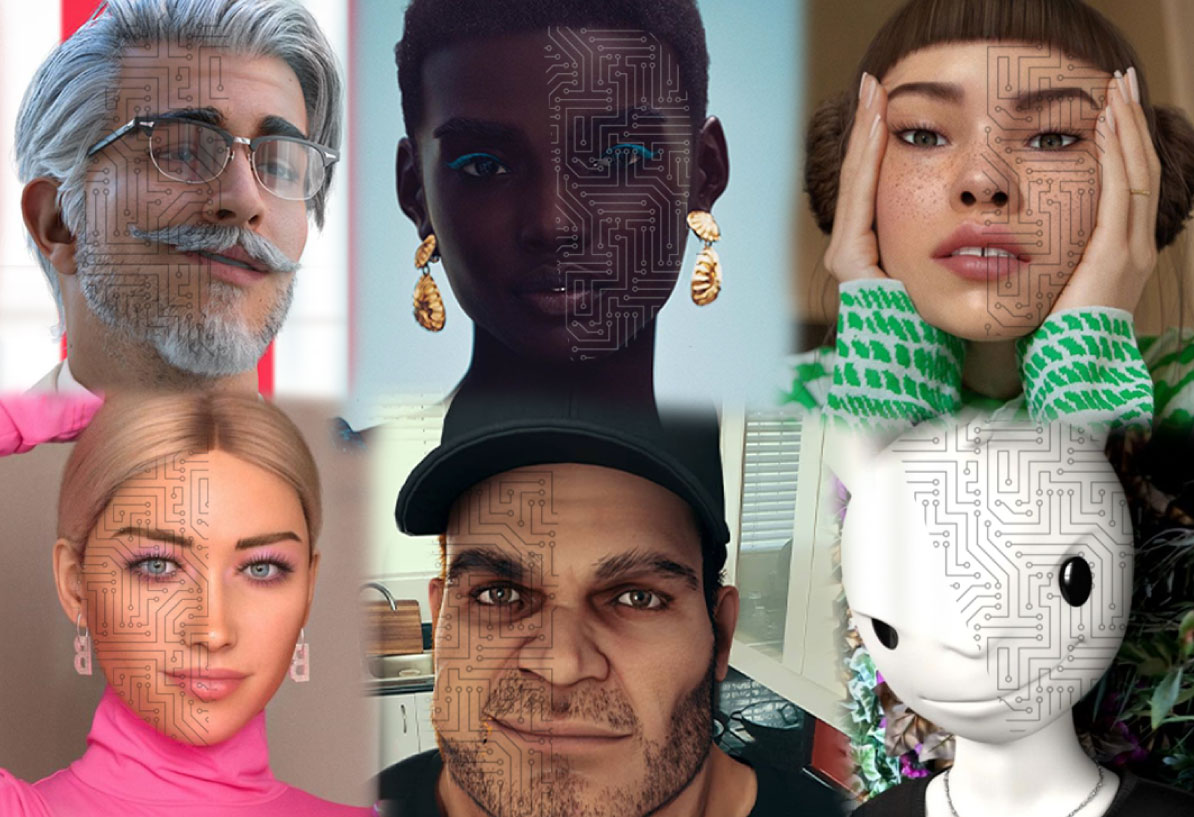
Social media users may have noticed an increase in the number of accounts that appear to be human, but upon closer examination, the accounts belong to virtual people who have been computer-generated. These are what are these days known as virtual influencers and they are gaining popularity at an immense pace. Major brands are using them for marketing purposes and some companies have even been created to act as agencies for these non-human ambassadors.
Virtual Humans is one of these companies. GoBinge spoke to their Chief Executive Officer, Christopher Travers, to get a better understanding of this emerging trend.
“Virtual humans are an emerging, fully-neutral content medium that can be used to promote any story, message, experience, or product you want. They engage with humans in digital spaces and fandoms develop around them. More and more, virtual humans are becoming embedded in self-identity,” Christopher explained.
He added that even real people sometimes have alter egos online – some even opt to use avatars to display themselves to the world. In this sense, he argues that humans are driven by an innate sense of curiosity about what we could be, which is why he believes virtual humans are just the beginning of a far bigger movement.
“People live vicariously through human influencers, and now virtual influencers are giving the same individuals an opportunity to explore more novel, captivating life storylines. The more we augmented and mix our reality, layering these virtualized objects atop our human selves, the less organic human content will captivate us. Eventually, everything we look at will have an augmented layer, even humans,” Christopher elaborated.
When asked why he think big brands are loving virtual influencers, he said that one of the main reasons is that virtual influencers have about three times the engagement rate as their human counterparts.
“Virtual influencers strike a cord. HypeAuditor ran a study identifying virtual influencers enjoy 3x more engagement than your typical human influencer. Brands love the innovation, and so do fans. They’re an eye-catching vessel through which incredible stories can be told—something brands have been longing for years,” he said.
Currently, some of their biggest clients include the Olympics and Riot Games – both have used virtual influencers in major marketing campaigns.
Christopher explained to us that creating a new virtual influencer is no easy task.
“The process is, of course, multi-fold. The best strategy for creating a fully-fledged virtual influencer personality, in my opinion, is to work with someone, such as a writer, who is representative of who you hope your character will become. This brings a layer of authenticity and representation to the table in a way I believe is lost on certain storytellers. Through representation comes authenticity. Another important factor is one’s ability to delineate between what features you need to define and which ones are simply too specific or irrelevant to fans. Sometimes, letting fans determine the personality traits of a virtual influencer might be the best way to go about it,” he offered.
When creating new virtual influencers, they sometimes rely on the needs of their clients but they also decide internally what the nature, backstory, look and personality of new characters should be.
Currently, Christopher’s company manages virtual humans manually. In other words, artificial intelligence is not leveraged in any way. Instead, real humans work to create the characters and to manage them and to create their content. According to Christopher, AI currently plays a “trivial” role in the virtual influencer landscape, simply because the technology just isn’t advanced enough.
Christopher did mention that he is personally very excited to be at the forefront of major change that is taking place in the manner in which brands and customers connect.
Technology has allowed us to construct a new reality, a new normal in which we all operate. With every wave of technological advancement comes massive shifts—of capital, of attention, of values”
“Opportunity best presents itself during moments of change, and technology, as of late, is responsible for spawning some of the most significant changes in the history of human consumption experiences. Anyone who analyzes and acts on shifts driven by technology, especially massive ones, are opportune to create the deepest connection with those undergoing a shift of their capital, attention, and values,” Christopher explained.